Andersen USA Brings AI Security Leaders Together in Dallas to Discuss Agentic AI, Zero Trust, and Accountability
Dallas event examines security and accountability challenges in autonomous AI
Andersen USA hosts an AI Security event in Dallas exploring agentic AI, Zero Trust, machine identities, AI penetration testing, and accountability in autonomous AI systems.
OnAirToday
Newsroom
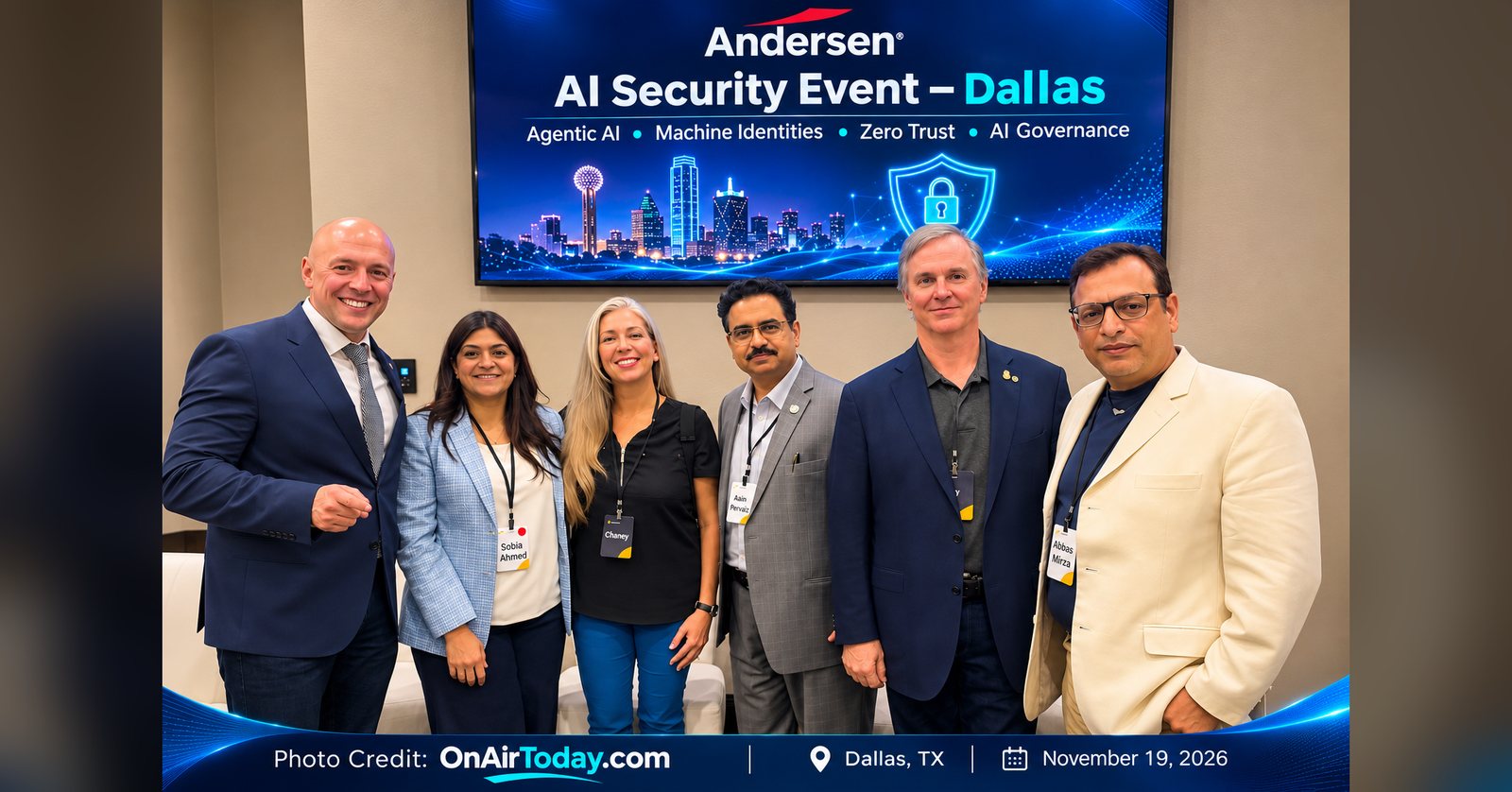
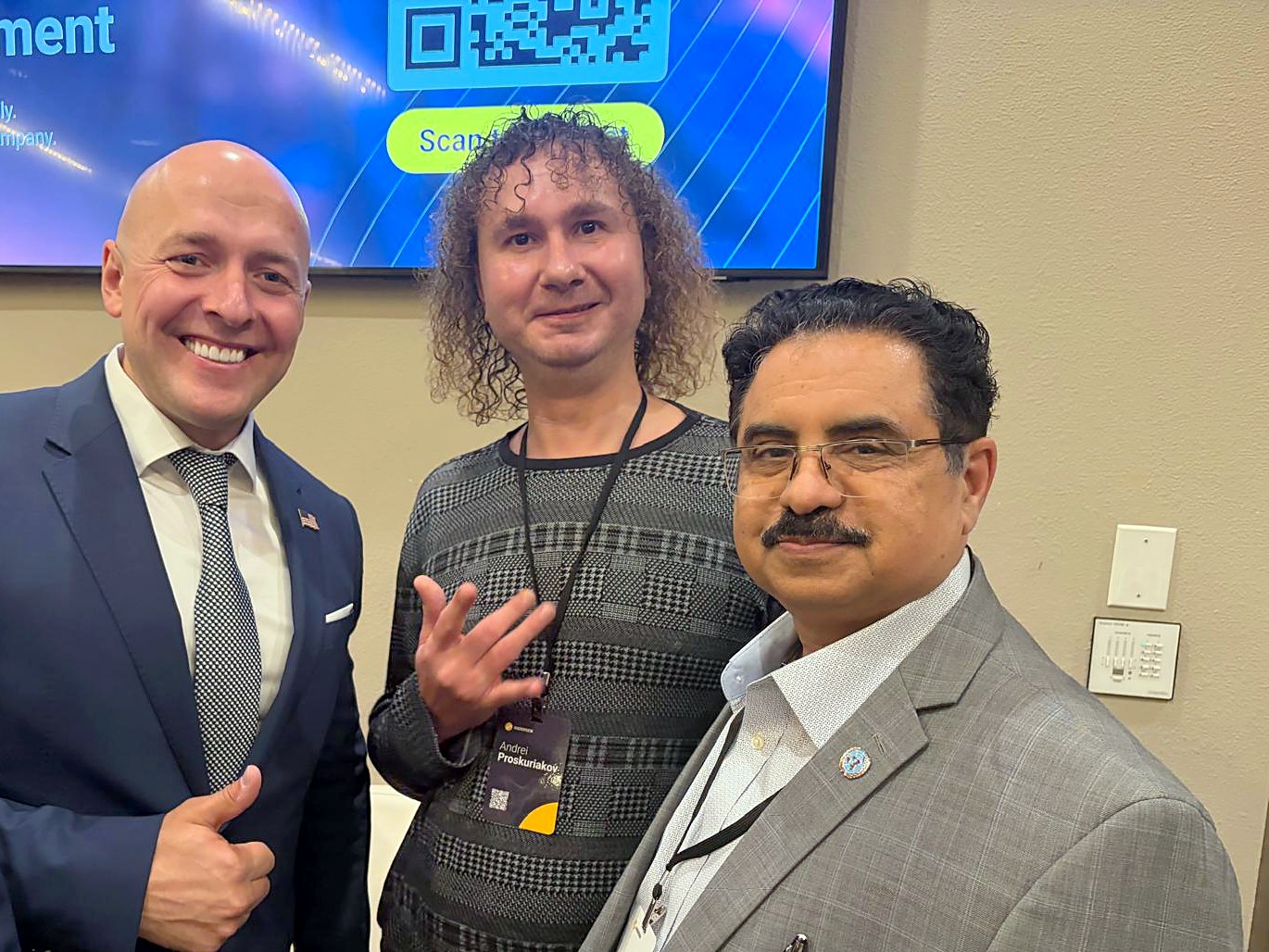
Cybersecurity and AI professionals gather at Andersen USA's AI Security event in Dallas on November 19, 2026. Photo: OnAirToday.com
DALLAS, TEXAS — November 19, 2026 — Andersen USA brought together cybersecurity professionals, technology executives, and AI governance specialists in Dallas for an evening focused on the changing security landscape as artificial intelligence becomes increasingly autonomous.
The event explored several important topics shaping enterprise cybersecurity, including agentic AI, machine identities, Zero Trust architecture, AI governance, and AI penetration testing.
As organizations move beyond traditional AI assistants toward autonomous agents capable of executing tasks, accessing enterprise systems, and making operational decisions, the discussion highlighted a growing challenge: how to maintain meaningful human accountability when AI systems operate with increasing independence.
Event at a Glance
- Event: AI Changed Cybersecurity. Now What?, hosted by Andersen
- Date: Thursday, November 19, 2026, beginning at 3:30 p.m. Central Time
- Venue: Chama Gaúcha Brazilian Steakhouse, Grapevine, Texas, in the Dallas–Fort Worth area
- Format: In-person panel discussion with Q&A, a roundtable, and dinner with networking
The Panel: Who Do You Trust When AI Acts?
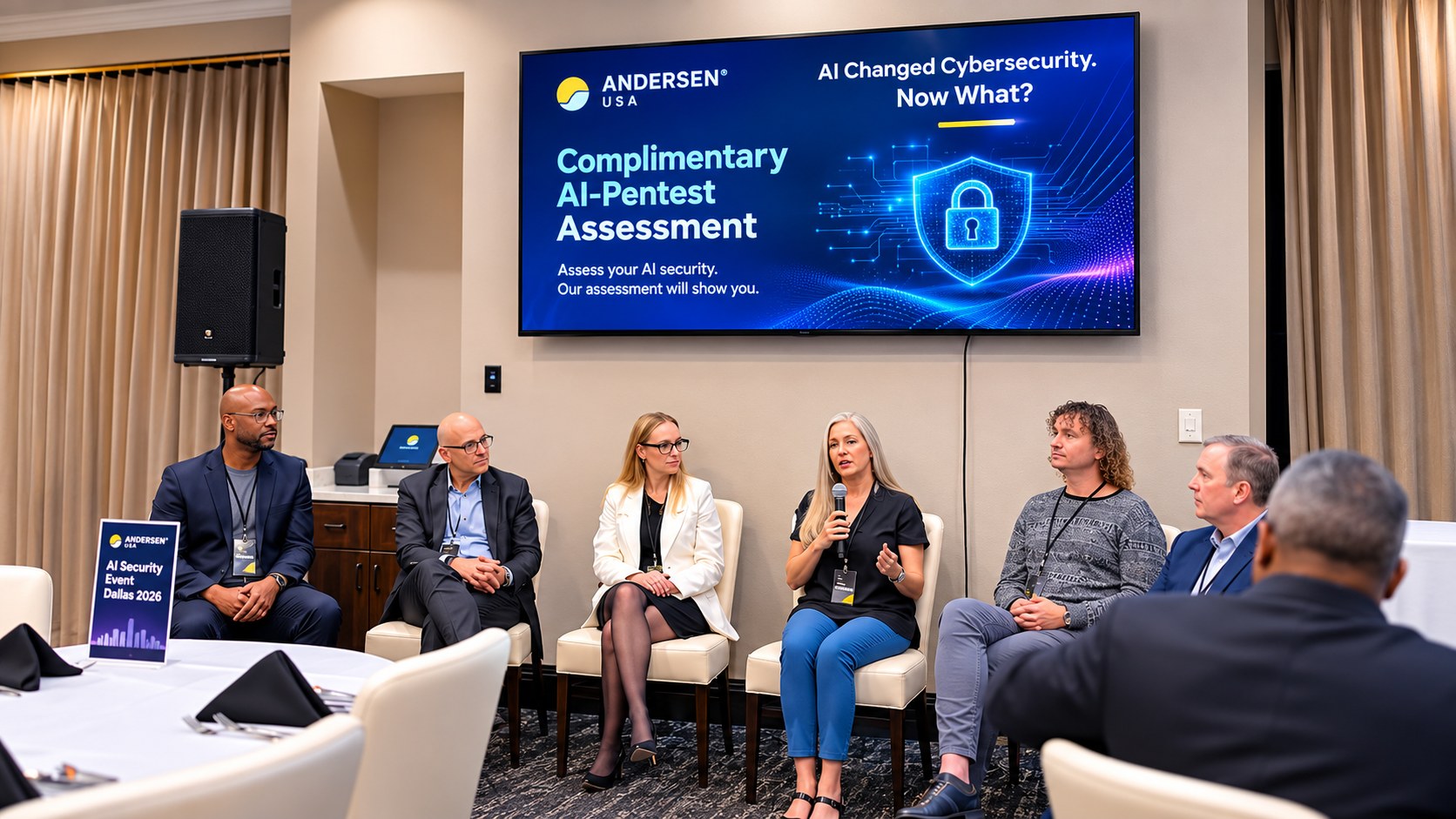
The evening's panel and Q&A ran under the title "Who Do You Trust When AI Acts?" and was moderated by LaMont Wheat, Executive AI Orientation & Pre-Delegation Literacy Advisor at UHMUM. The speaker slide displayed in the room listed:
- LaMont Wheat (moderator), Executive AI Orientation & Pre-Delegation Literacy Advisor, UHMUM
- Alina Lada, Director of IT Partnerships, Andersen
- Andrei Proskuriakov, Partner, Business Development, Moai Labs
- Rick Echevarria, Senior Vice President, Business Development, Keyfactor
- Donald Codling, Cyber Security Advisor, Codling Group
- Amy Chaney, SVP Technology, COO
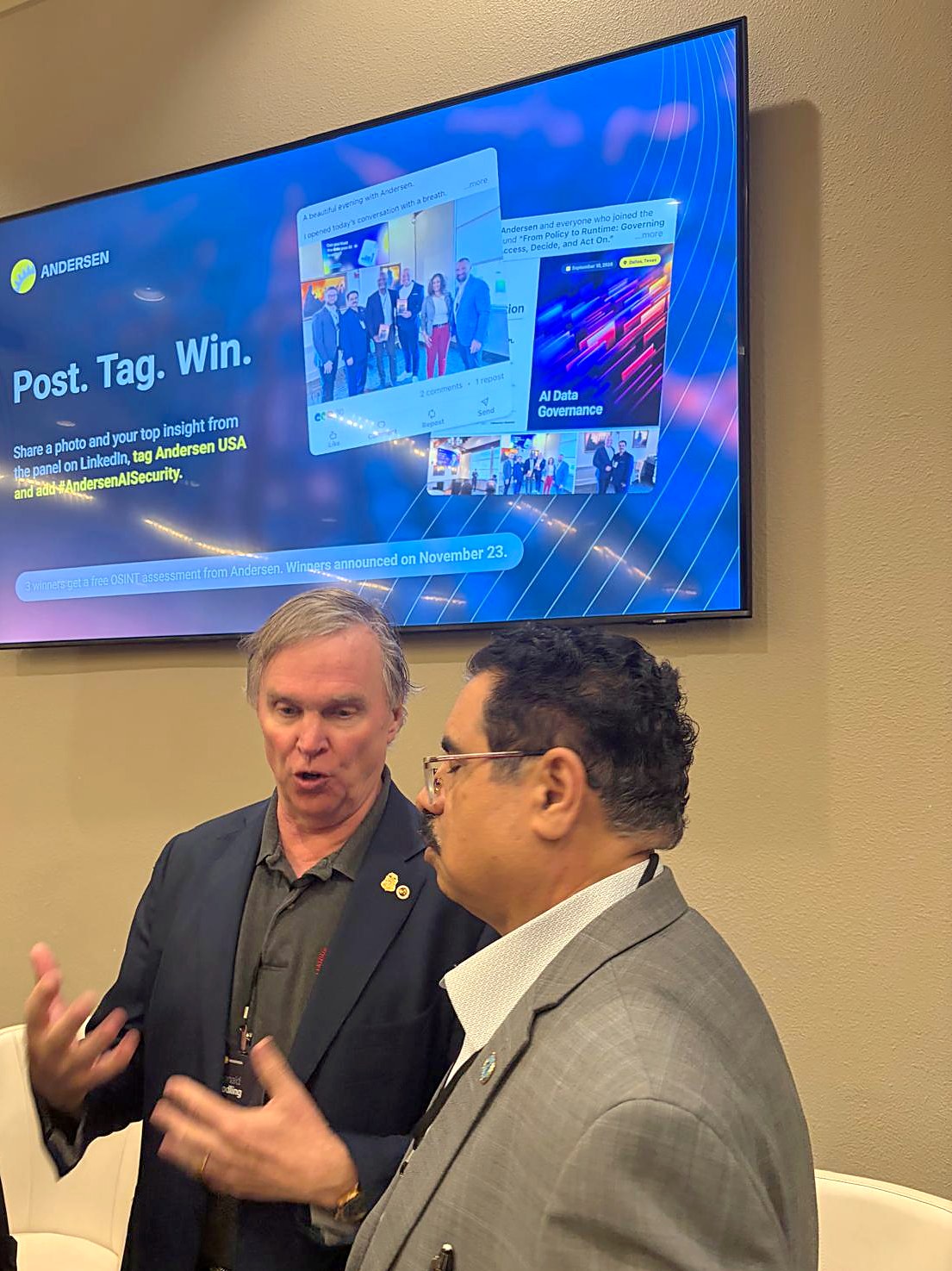
The lineup above reflects the event slide and Andersen's published announcements. OnAirToday has not independently confirmed that every listed panelist took part in the session. OnAirToday's photos from the evening show Alina Lada and Andrei Proskuriakov on the panel, and Donald Codling and Andersen's Valentin Kuzmenko at the event.
A Critical Question: Who Is Accountable When AI Acts?
One of the evening's notable discussions centered on a question raised by Anzar Hasan, MBA, CISSP, CISM, AIGP, PMP, Vice President of AI Governance & Security at ARSH.AI.
Hasan challenged the panel to consider whether organizations are prepared to enforce real-time accountability in autonomous agentic AI environments.
His question addressed the limitations of conventional governance approaches, particularly when humans may be directly involved in decisions, supervising automated systems, or operating outside individual execution loops.
The discussion underscored a fundamental distinction: AI systems may execute decisions autonomously, but organizational accountability cannot simply be transferred to machines.
Accountability Must Begin at the Root Cause
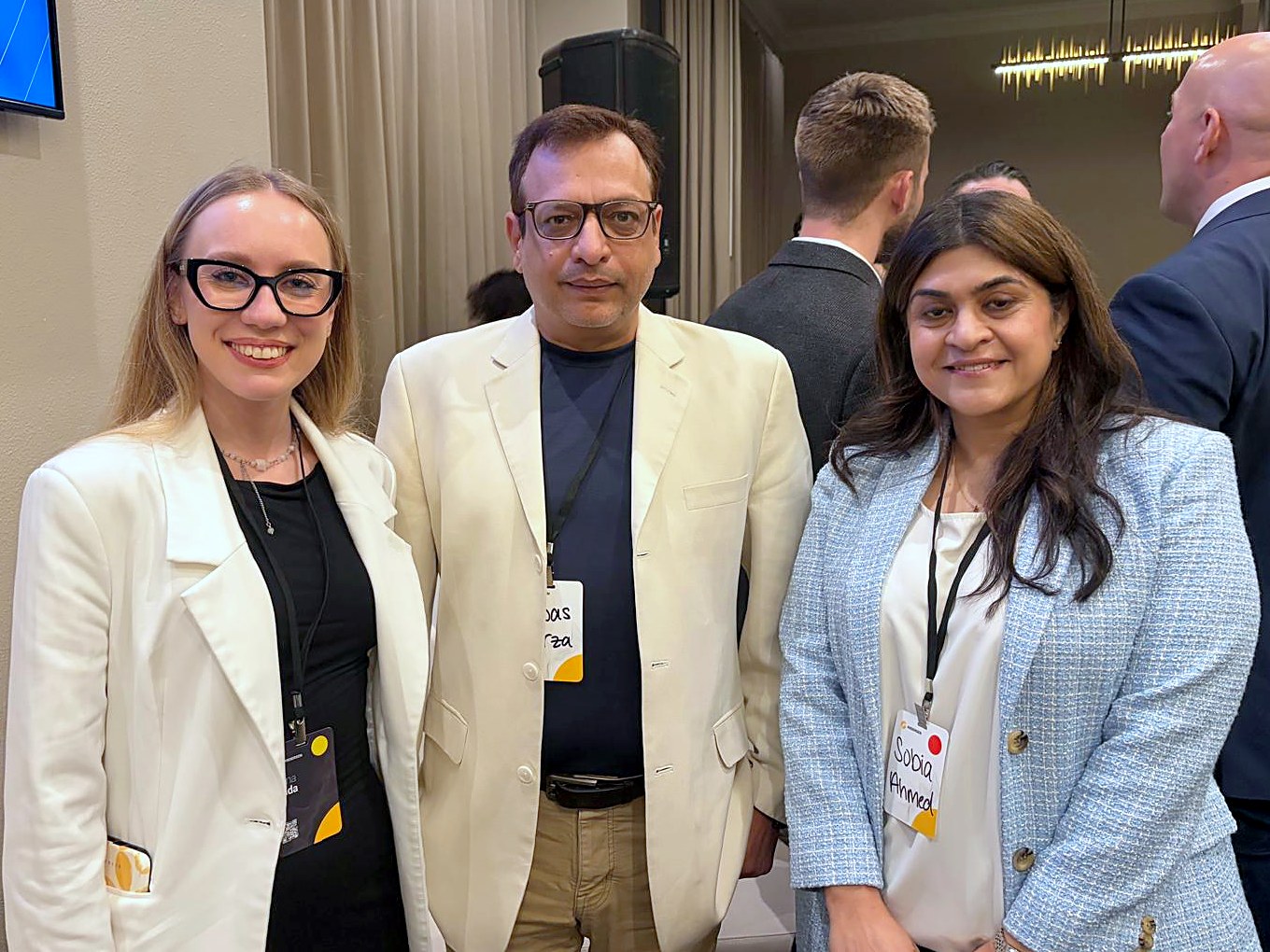
Also attending the event was Abbas Mirza, Founder and CEO of ARSH.AI, who emphasized the importance of examining the complete chain of information and decisions leading to an AI-generated action.
In Mirza's view, accountability should extend beyond identifying who authorized an action. He argues that organizations must be able to investigate:
- What information influenced the AI system's decision?
- Where did that information originate?
- Which human users, AI agents, applications, and external systems contributed?
- What instructions, permissions, and policies shaped the outcome?
- How did the system reach its decision?
- Who or what authorized the resulting action?
- Can the complete sequence be reconstructed and audited?
This approach requires end-to-end traceability, reliable provenance records, continuous monitoring, and clearly defined controls across the AI lifecycle.
It also highlights why governance and security must be incorporated into AI system architecture rather than introduced after deployment.
Panel Weighs AI Penetration Testing as a Reality Check
The panel also discussed AI penetration testing — deliberately probing AI-powered systems and agents to see how they behave under real attack conditions rather than on paper.
The discussion carried the same theme as the rest of the evening: documenting AI risk is not the same as demonstrating that an AI deployment holds up. Organizations need evidence about what an agent will actually do when it is misled, probed, or given access to the tools it depends on.
Andersen USA offered attendees a complimentary AI-Pentest Assessment, giving organizations a practical way to test their own AI deployments instead of relying on policy documents alone.
OnAirToday is reporting the offer as it was presented at the event; the assessment's scope and methodology were not part of the session OnAirToday attended.
Analysis: Agentic AI Is Redefining Enterprise Security
Traditional cybersecurity models were largely developed around human users, applications, and predictable system interactions.
Agentic AI introduces additional complexity because autonomous systems may interact with multiple tools, access sensitive information, and execute sequences of actions with limited human intervention.
These capabilities raise important questions about identity management, authorization boundaries, prompt injection, tool misuse, data integrity, and the security of interconnected AI systems.
Zero Trust principles, machine identity governance, least-privilege access, and continuous verification are becoming increasingly relevant to securing these environments.
Andersen USA Supports Important Industry Conversations
Events such as Andersen USA's Dallas AI Security gathering provide opportunities for technology leaders, cybersecurity practitioners, and governance specialists to exchange perspectives on emerging risks and practical approaches to responsible AI adoption.
By bringing these discussions into a collaborative professional setting, Andersen USA is helping encourage dialogue around the security and governance challenges organizations face as AI capabilities evolve.
The event also provided opportunities for networking and knowledge sharing among Dallas–Fort Worth technology professionals.
Analysis: From AI Awareness to Accountability by Design
A central takeaway from the discussion is that AI security must evolve alongside AI capabilities.
Organizations should move beyond documenting responsible AI principles toward implementing technical mechanisms that make those principles enforceable.
This includes decision traceability, identity-based access controls, policy enforcement, provenance tracking, continuous security testing, and mechanisms for human intervention.
As autonomous AI systems become more capable, the ability to reconstruct how an action occurred—and identify the information and actors that influenced it—will become increasingly important.
The next stage of enterprise AI governance will depend not only on what autonomous systems can accomplish, but also on whether organizations can demonstrate that their actions remain secure, traceable, and accountable.
About Andersen USA
Andersen is a software development and technology services company that works with clients in the United States, Europe, and the United Kingdom. Andersen USA is the company's U.S. presence and organizes events for technology and business leaders, including its Dallas AI security program.
Valentin Kuzmenko, Andersen's Chief Commercial Officer for the U.S. Business Unit, leads growth, partnerships, sales strategy and client acquisition across the U.S. territory.
- Website: andersenlab.com
- LinkedIn: Andersen USA
About ARSH.AI
ARSH.AI is an AI technology company focused on AI solutions, security, architecture, and governance.
- Website: arsh.ai
- Abbas Mirza, Founder and CEO: mirza.us
- Anzar Hasan, Vice President of AI Governance & Security: AnzarHasan.com
Disclosure: ARSH.AI was founded by Abbas Mirza, who also founded OnAirToday. Anzar Hasan is the author of a book featured in the OnAirToday Books Library. Sections labeled "Analysis" are OnAirToday's editorial perspective; event details come from OnAirToday's attendance, the panel slide shown at the event and Andersen's published event information.
Generated insight by OnAirToday AI
As AI systems gain autonomy, security discussions must address how they are tested, governed, and held accountable. Bringing together leaders to examine agentic AI, Zero Trust, and machine identities highlights the breadth of challenges involved.
Key takeaways
Generated insight by OnAirToday AI
- Andersen USA Brings AI Security Leaders Together in Dallas to Discuss Agentic AI, Zero Trust, and Accountability
- Andersen USA hosts an AI Security event in Dallas exploring agentic AI, Zero Trust, machine identities, and accountability in autonomous AI systems.
- Industry professionals explore the cybersecurity challenges of autonomous AI systems, machine identities, and the growing importance of governance by design.
Why it matters: Industry professionals explore the cybersecurity challenges of autonomous AI systems, machine identities, and the growing importance of governance by design.

Comments
Keep comments relevant and respectful. No links, advertising, self-promotion, or spam.